

Using the Service Delivery Model to Drive Results

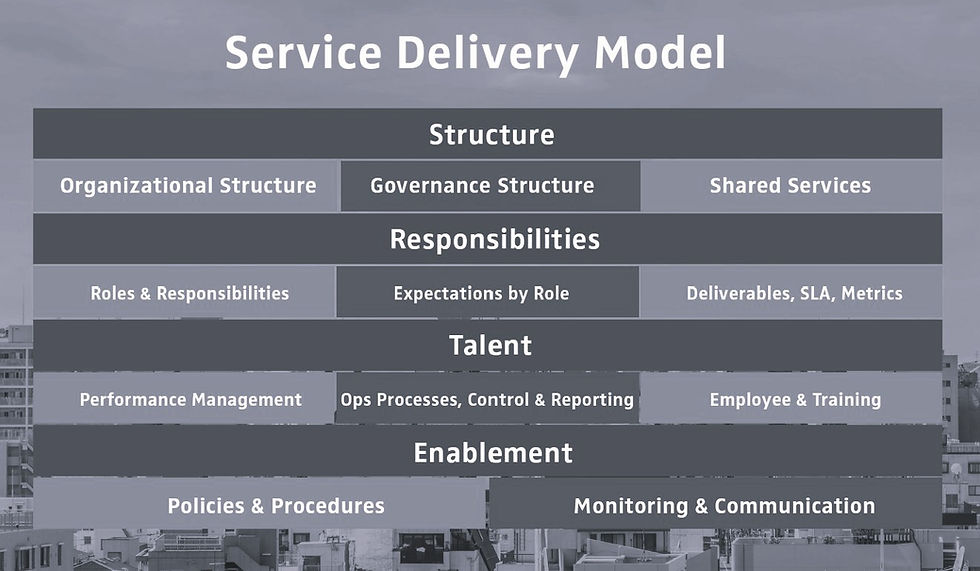
A service delivery model is more than a framework: it is the mechanism that turns strategy into consistent execution. When designed intentionally, it creates clarity in how services are delivered, measured
and improved across engagements.
At its core, an effective delivery model anchors work in defined capabilities, standard processes, and measurable outcomes. This reduces reliance on individuals and instead builds repeatable systems that can scale. It also strengthens performance by aligning roles, responsibilities, and expectations with clear metrics.
Start with Structure and Governance
A strong model begins with structure, that is, how teams are organized and how decisions are made. Clear governance ensures accountability, communication, and alignment with client goals. In a program delivery environment, a defined governance structure (executive, tactical, and operational layers) allows issues to be escalated quickly and resolved at the right level. This prevents delays and ensures continuity in delivery, even when challenges arise.
Use the Engagement Lifecycle to Guide Delivery
A delivery model becomes effective when it follows a defined lifecycle, that is, initial engagement through planning, execution, delivery, and closure. Each phase includes checkpoints that ensure readiness before moving forward. During the planning phase, defining KPIs, resource plans, and communication strategies establishes a baseline for success. If these elements are not clearly defined upfront, teams often face rework, misalignment, and cost overruns during execution.
Enable Delivery Through Talent and Processes
A structure is only successful with the right talent making it work. A mature delivery model integrates workforce planning, training, and performance management into day-to-day operations. For example, when a team aligns onboarding and training with project goals, they can ramp up faster and maintain consistency, reducing the risk of delays caused by knowledge gaps or turnover.
Focus on Measurable Outcomes
A key differentiator of a strong service delivery model is its emphasis on metrics. Defining KPIs and performance measures early enables continuous monitoring and improvement. Tracking delivery against schedule, cost, and quality metrics allows teams to identify trends and take corrective action early,
Build for Continuity, Not Just Completion
Finally, an effective model plans for transitions and long-term sustainability. Structured knowledge transfer and documented processes ensure continuity when engagements evolve or scale.
A well-defined service delivery model does not just support delivery; it makes it happen. By combining structure, lifecycle discipline, talent enablement, and measurable outcomes, organizations can deliver services more consistently, reduce risk, and create long-term value.


Comments